In the current business environment of a global pandemic, economic volatility, natural disasters, civil and political unrest and general business disruptions including redesign, realignment and potential job losses leadership is in crisis!
Leaders and managers – just like you, are in crisis as you find yourself:

- Overwhelmed by what needs to get done on a daily basis – with your list just getting longer and longer.
- Experiencing high levels of stress and unhealthy doses of uncertainty as your workplace is continually disrupted.
- Simply not coping!
- Enduring low levels of morale, decreased performance and damaged relationships.
- Experiencing high and low turbulent emotions with a sense of loss and ‘I don’t care’.
Resistance to any kind of change is actually quite normal. We are actually hardwired to resist change!
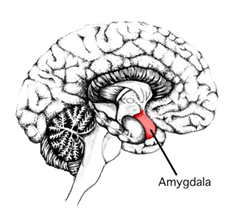
Part of our brain, the amygdala, interprets change as a threat and releases hormones into our bodies to protect us from change. We also have financial, family, health and other needs to protect. Not to mention that we may not like the practical effect a change might have on us, like reporting to new manager, changing jobs or doing a budget.
And, when in crisis mode at work, you will most likely:
- Be fraught by deteriorating interpersonal relationships.
- Struggle to meet your deadlines.
- Constantly feeling emotionally, physically and mentally exhausted.
- Feel disconnected from your team members.
- Micromanage your team.
- Feel overawed by our workload and demands on our time which just keeps on coming
- Grab at straws and not be fully engaged!
In my work with managers, team leaders and supervisors in South African and on the African continent, I often see leaders working in crisis mode for various reasons.
Firstly, they are always changing their work priorities. This lack of direction (or lack of proper planning!) only contributes towards your team members legitimately questioning your ability to lead them effectively when you have no certainty of what needs to be done and how it needs to be done.
Procrastination leads to crisis management! And this is more common than you think! No matter what the reason for your procrastinating – poor time management, avoiding unpleasant issues, or the failure to prioritize – it creates unnecessary deadlines and promotes stress and anxiety. BIG. TIME.
Failure to develop your team members only creates dependency! And your team members with insufficient skills will not help you reach your objectives and goals, leaving you in crisis.
Ineffective delegation. The most common reasons I have come across for leaders not wanting to delegate are an excessive need to control; the TWDIR Syndrome (They Won’t Do It Right!), and fear that their role will no longer be necessary!
And finally, a lack of being able to learn to expect the unexpected and to make contingency plans to respond appropriately. I have seen this lack of foresight completely derail leaders and ensures that they remain in crisis mode.
Little wonder you are barely surviving!
And, if you do not do anything about it you will be:
- Even more resistant to any kind of change in the workplace, especially if it impacts you personally.

- Too busy to reflect on your own behavior, and the impact it has on you and those around them.
- Stressed and stretched by everything that you need to do and accomplish in a day, only to find that your motivation dwindles and you completely neglect your own needs to your own detriment.
- Simply ‘going through the motions’ whenever you are disrupted again.
- Tarnishing your personal brand (without even possibly realizing it) to your detriment.
- Needing the determination of Hercules to get out of bed in the morning as you are heading for some kind of melt down! According to an early 2020 Gallup survey, 76% of employees experience burnout. A study by the US Centre for Disease Control and Prevention shows that anxiety symptoms tripled and depression quadrupled in 2020 in a group of almost 6000 participants compared to 2019.
I get it!
I have had the privilege of working with many culturally diverse managers, team leaders and supervisors in different organizations within South Africa and on the African continent over the years and have seen this play out again and again.
And I honestly believe, that as leaders we need to strongly work on our leadership skills from the inside out to ensure we STEP UP and OUT of our comfort zone.
However, let me firstly explain what I mean by ‘inside-out’.
‘Inside-out’ means learning to manage our own behaviors more effectively – our emotions and actions so as to make better, informed choices. I believe we are all leaders! Whether we have a formal role inside an organization, lead efforts in the communities in which we live, manage activities for our families or lead our own lives, we all lead in some way.

My work is simply this: I partner with organizations and their managers, supervisors, team leaders and their teams, as well as individuals to help them become better leaders so that you can engage with and transition through change more effectively.
You see, fundamentally, I believe that our attitude to ‘change must change’ within the context in which we find ourselves! Our inherent instinct to merely survive needs to be questioned and challenged. ALL. THE. TIME. Change is not the enemy. I think change is the gift we need to embrace if we want to grow to be better leaders.
As a reformed rescuer, recovering perfectionist and workplace wellness specialist with 15+ years’ experience I’ve got you and your teams back!
I truly believe that without change in our lives, we get stuck; left behind; become irrelevant and incredibly frustrated! So, over the past few months, I have intentionally disrupted every other aspect of my life that was not previously dislodged (more about that later!), and ‘Inside-Out Leadership’ is being stirred and shaken up to serve and deliver to those leaders who are action takes and change makers.
In your corner!